How Many Calories Are in 1kg? Calorie Deficit and Weight Loss Explained
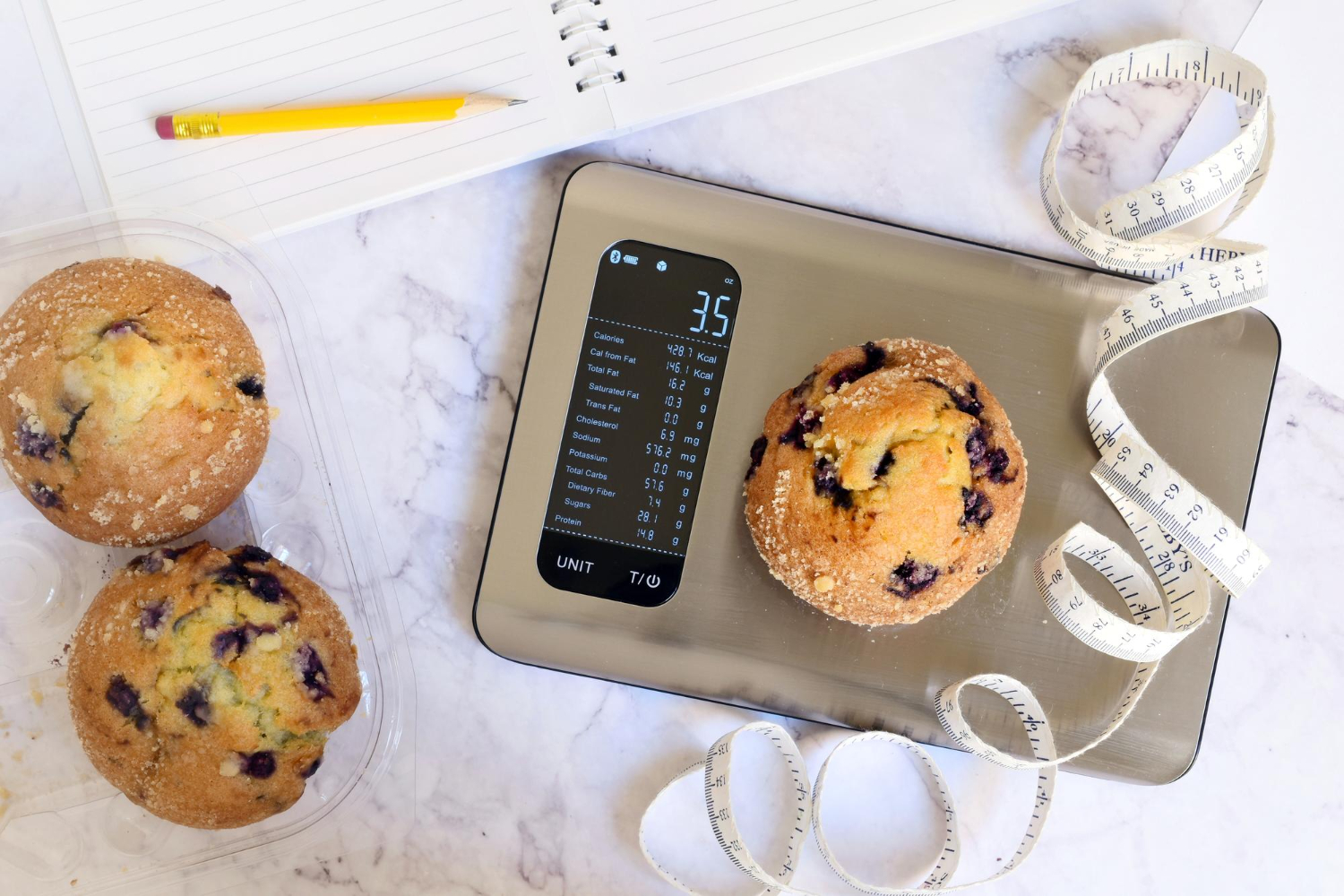
If you are trying to lose weight, you may have wondered: how many calories is 1 kilogram of body weight?
The commonly used estimate is that 1kg of body fat stores around 7,700 calories (kcal) of energy. In simple terms, creating a total calorie deficit of roughly 7,700 kcal may correspond to around 1kg of fat loss.
However, real weight loss is not quite that simple.
Your body weight includes fat, water, muscle, glycogen, food in your digestive system and other tissues. Because of this, losing 1kg on the scales does not always mean you have lost exactly 1kg of body fat.
Quick answer
1kg of body fat is commonly estimated to equal approximately 7,700 calories.
For example:
500-calorie daily deficit × 7 days = 3,500 calories
600-calorie daily deficit × 7 days = 4,200 calories
1,000-calorie daily deficit × 7 days = 7,000 calories
The actual amount of weight you lose can vary because metabolism, activity, water balance and body composition all affect the result.
If you want to estimate how many calories your body needs each day before planning a deficit, start with the CalcMax Calorie Calculator.
How Many Calories Are in 1kg of Body Fat?
A widely used rule of thumb estimates that one kilogram of stored body fat represents roughly 7,700 kcal of energy.
So, if someone asks “how many calories are in 1kg?”, the simple answer is:
Approximately 7,700 calories per 1kg of body fat.
But it is important to include the words “body fat.”
One kilogram of body weight is not automatically equivalent to 7,700 calories because your weight can rise or fall due to water, glycogen, muscle and digestive contents as well.
This is why you might lose 1kg during your first week of dieting without having created a 7,700-calorie deficit. Some of that early change may simply be water weight.
What Is a Calorie Deficit?
A calorie deficit occurs when your body uses more energy than you consume through food and drink.
For example, imagine your body needs approximately 2,300 calories per day to maintain your current weight.
If you eat:
2,300 calories: roughly maintenance
2,000 calories: approximately 300-calorie deficit
1,800 calories: approximately 500-calorie deficit
Over time, consistently consuming less energy than your body uses encourages the body to draw on stored energy.
The NHS also explains that weight loss occurs when energy intake is lower than energy expenditure and recommends gradual, sustainable changes rather than aggressive calorie restriction. You can read its guidance on calories and weight loss.
Before choosing a calorie target, it helps to understand your resting energy requirements. The CalcMax BMR Calculator estimates how many calories your body burns at rest.
How Big a Calorie Deficit Is Needed to Lose 1kg?
Using the 7,700-calorie estimate, losing approximately 1kg of body fat would theoretically require a total deficit of around 7,700 calories.
Here is what that looks like at different daily deficits:
Daily Calorie DeficitApprox. Weekly DeficitTheoretical Time to Reach 7,700 kcal250 calories1,750 caloriesAbout 31 days300 calories2,100 caloriesAbout 26 days500 calories3,500 caloriesAbout 15–16 days600 calories4,200 caloriesAbout 13 days750 calories5,250 caloriesAbout 10 days
These figures are mathematical estimates, not promises.
Your actual rate of weight loss can be faster or slower.
Instead of immediately choosing a large deficit, calculate your approximate maintenance needs using our daily calorie calculator and work from there.
Can You Lose 1kg in One Week?
It is possible for the number on the scale to fall by 1kg in a week, particularly when someone first changes their diet or activity level.
That does not necessarily mean 1kg of body fat has been lost.
To theoretically lose 1kg of pure fat in seven days using the 7,700-calorie estimate, the average deficit would be:
7,700 ÷ 7 = approximately 1,100 calories per day
For many people, that would be a very aggressive deficit and may be unsuitable.
The NHS generally recommends aiming for gradual weight loss of around 0.5kg to 1kg per week, depending on the individual.
Rather than chasing a specific number on the scale, focus on a calorie intake that is realistic enough to maintain consistently.
Why Doesn't a 7,700-Calorie Deficit Always Equal Exactly 1kg Lost?
The human body is not a simple calculator.
Several factors influence your scale weight.
1. Water weight
Your body can hold different amounts of water from one day to another.
Salt intake, carbohydrate intake, exercise, hormones and hydration can all cause temporary changes.
You could therefore weigh 1kg less tomorrow without having lost 1kg of fat.
2. Glycogen stores
Your muscles and liver store carbohydrate in the form of glycogen.
Glycogen is stored alongside water, so changing carbohydrate intake can noticeably affect body weight.
3. Muscle mass
Weight loss does not always come exclusively from fat.
Depending on your diet, activity and rate of weight loss, some lean tissue may also be lost.
4. Your calorie needs can change
A smaller body generally requires less energy than a larger body.
As your weight decreases, your maintenance calorie requirements can gradually change too.
This is one reason your original calorie deficit may become smaller after losing weight.
You can recalculate your calorie needs periodically with the CalcMax Calorie Calculator.
Calories, BMR and Daily Energy Expenditure
To understand weight loss properly, it helps to separate BMR from total daily calorie expenditure.
Your Basal Metabolic Rate is approximately the amount of energy your body requires to maintain basic functions such as:
breathing
circulation
brain function
body temperature
organ function
Your actual daily energy expenditure is higher because you also use calories through movement, work, exercise and digestion.
For example, CalcMax's BMR Calculator estimates resting calorie requirements and shows how activity can affect overall energy needs.
That means you should not simply eat fewer calories than your BMR because you saw that number on a calculator.
Instead, consider your overall daily calorie requirement.
Example: How Long Could It Take to Lose 1kg?
Imagine someone maintains their current weight on approximately 2,200 calories per day.
They decide to consume around 1,700 calories per day.
Their estimated daily deficit would be:
2,200 − 1,700 = 500 calories
Over one week:
500 × 7 = 3,500 calories
Using the 7,700-calorie-per-kilogram estimate:
7,700 ÷ 500 = 15.4 days
So mathematically, it could take around 15 to 16 days to create a cumulative 7,700-calorie deficit.
Again, this does not guarantee that their weight will fall by exactly 1kg on day 15.
Daily body weight naturally fluctuates.
Should You Track Weight or Calories?
Both can be useful, but neither should be viewed in isolation.
Your body weight tells you whether your overall trend is moving up, down or staying stable.
Calorie tracking helps you understand how much energy you are consuming.
BMI can also provide an additional general screening measure based on height and weight. If useful, you can check yours using the CalcMax BMI Calculator.
However, day-to-day scale changes can be misleading.
Suppose your weight looks like this:
Monday: 82.0kg
Tuesday: 81.7kg
Wednesday: 82.2kg
Thursday: 81.6kg
Friday: 81.8kg
Saturday: 81.4kg
Sunday: 81.5kg
Your weight moved up and down throughout the week, but the overall direction was lower.
Looking at trends over several weeks is often more useful than reacting to a single weigh-in.
How to Create a Sustainable Calorie Deficit
A calorie deficit does not have to mean dramatically cutting your food intake.
Small, repeatable changes can add up.
You might:
reduce portions of calorie-dense foods
choose lower-calorie drinks more often
include protein-rich foods in meals
eat more vegetables and fibre-rich foods
increase daily walking
strength train regularly
reduce frequent high-calorie snacks
cook more meals at home
track portions for a short period to understand your normal intake
The goal is not simply to eat as little as possible.
The goal is to create an approach you can realistically maintain.
If you are unsure what your starting calorie requirement might be, use the calorie needs calculator rather than choosing an arbitrary daily number.
Does Exercise Help Create a Calorie Deficit?
Yes.
A calorie deficit can come from:
Eating fewer calories
Burning more calories
Or combining both
For example, someone could create a 500-calorie daily deficit entirely through food.
Another person might reduce their intake by 300 calories and increase activity enough to burn an additional 200 calories.
Both could theoretically create a similar overall energy deficit.
Exercise also offers benefits beyond calorie expenditure, including improvements in cardiovascular fitness, strength and general health.
Is 1kg of Muscle Also 7,700 Calories?
No.
The approximate 7,700-calorie figure specifically refers to the estimated energy contained in 1kg of body fat, not every kilogram of human tissue.
A kilogram of muscle contains substantial water and has a very different energy composition.
This is another reason the question “how many calories is 1 kilogram?” needs context.
If you mean 1kg of body fat, approximately 7,700 calories is a useful estimate.
If you simply mean 1kg of scale weight, there is no single calorie value.
Does Everyone Need the Same Number of Calories?
No.
Your calorie requirements depend on factors including:
age
sex
height
weight
activity level
body composition
lifestyle
For example, two people who both weigh 80kg may have very different daily calorie needs if one is highly active and the other spends most of the day sitting.
That is why generic statements such as “eat 1,500 calories to lose weight” are not appropriate for everyone.
Start by estimating your own requirements.
You can also use the CalcMax BMI Calculator to put your weight in context relative to your height.
Frequently Asked Questions
How many calories is 1 kilogram?
If you mean 1 kilogram of body fat, the commonly used estimate is approximately 7,700 calories. However, losing 1kg of scale weight does not necessarily mean losing 7,700 calories' worth of body fat.
How many calories are in 1kg of fat?
Approximately 7,700 kcal is commonly used as an estimate for the energy stored in 1kg of body fat.
Is 7,700 calories exactly equal to 1kg?
No. It is an estimate rather than an exact biological rule. Actual weight changes are influenced by water, glycogen, muscle, body fat and changes in energy expenditure.
How many calories do I need to burn to lose 1kg?
Using the traditional estimate, you would need a cumulative energy deficit of approximately 7,700 calories to lose around 1kg of body fat. That deficit can come from reduced calorie intake, increased activity or both.
Is a 500-calorie deficit enough for weight loss?
For many people, a consistent calorie deficit can lead to gradual weight loss. A 500-calorie daily deficit equals approximately 3,500 calories per week, although actual weight change varies between individuals.
Can I lose 1kg without counting calories?
Yes. Calorie counting is only one method of controlling energy intake. Portion control, food choices, meal structure and activity can also help create a calorie deficit without tracking every calorie.
Why did I lose 1kg overnight?
A sudden 1kg change is usually unlikely to represent 1kg of body fat. Short-term weight changes are commonly influenced by hydration, sodium, carbohydrate intake, bowel contents and other factors.
The Bottom Line
So, how many calories are in 1kg?
If we are talking about 1kg of body fat, the commonly used estimate is:
1kg of body fat ≈ 7,700 calories
But weight loss is not perfectly linear.
A 7,700-calorie deficit does not guarantee that the scale will immediately show exactly 1kg less because body weight includes water, glycogen, muscle and other tissues.
Instead of focusing only on the 7,700-calorie number, first understand your own calorie requirements, create a realistic deficit and monitor your progress over time.
To get a personalised starting estimate based on your age, height, weight and activity level, try the CalcMax Calorie Calculator.
Useful calculators
Continue with a practical tool related to this guide.
Related guides
Read more from this topic cluster.
- UK VAT Calculator: How to Add, Remove, and Calculate Value Added Tax Accurately
Calculate UK VAT instantly. Learn how to add or reverse 20% and 5% tax from gross and net totals using formulas, examples, and our free VAT calculator.
- Geometry Calculator – Free Online Geometry Calculator
Use our free Geometry Calculator to calculate area, perimeter and circumference for circles, rectangles and triangles quickly and accurately online.
- Free Algebra Calculator for Equations and Expressions
Use our free Algebra Calculator to solve linear equations, find x, check your working and practise algebra with quick, accurate results online.