How to Calculate Water Intake by Weight
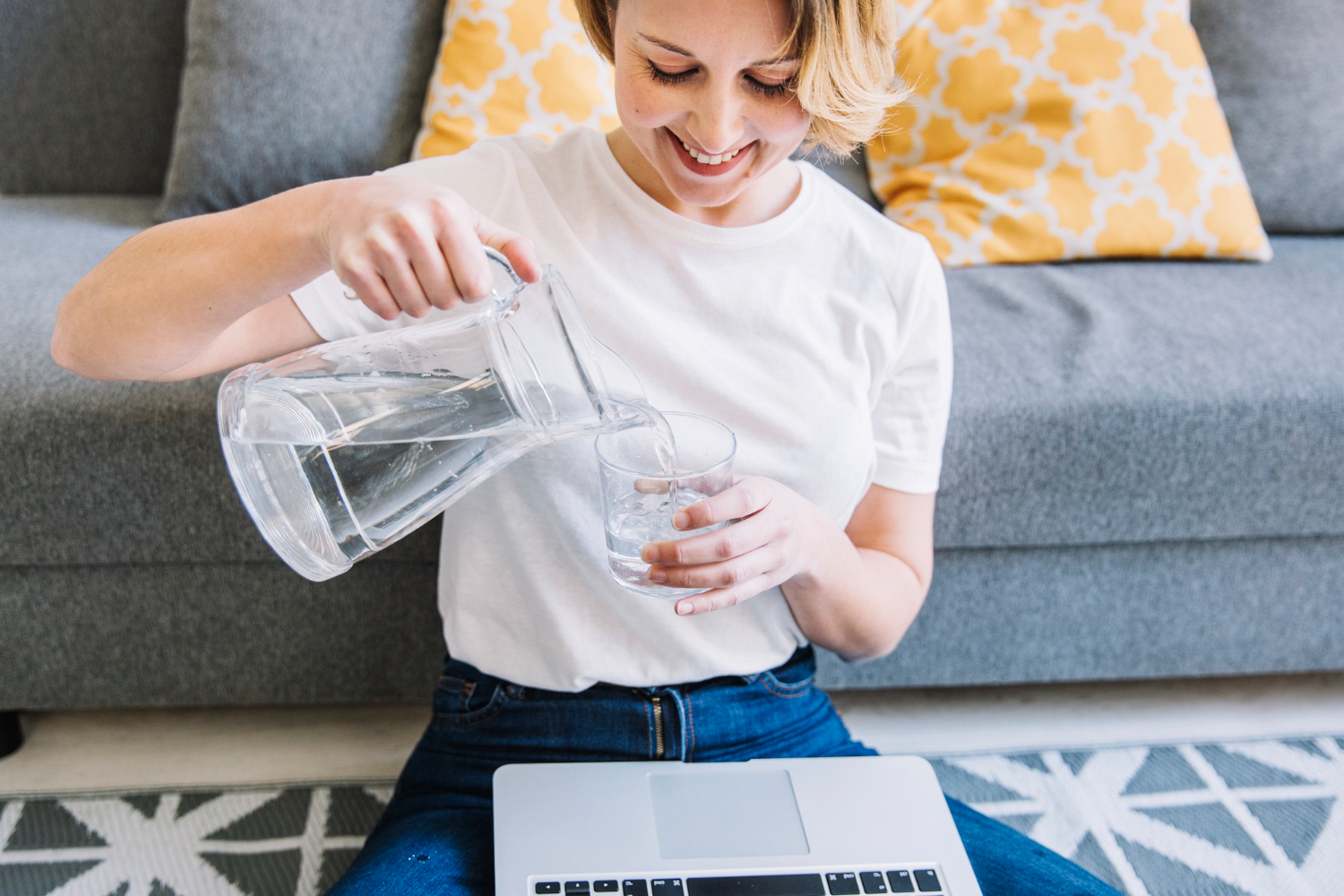
Knowing how much water you need each day can help you build a practical hydration routine. One simple way to estimate your daily fluid needs is to calculate water intake based on body weight.
A commonly used starting point is 30–35 millilitres of water per kilogram of body weight per day. For example, a person weighing 70 kg would estimate their daily water requirement at approximately 2.1–2.45 litres using this method.
However, weight is only one factor. Exercise, weather, illness, pregnancy, diet, and individual health needs can all affect how much fluid you need. The NHS also recommends drinking regularly and using thirst and pale-yellow urine as practical indicators of hydration.
For a quick personalised estimate, use the water intake calculator and enter your weight and other relevant information.
How to Calculate Water Intake by Weight
The basic weight-based calculation is:
Daily water intake = body weight (kg) × 30–35 ml
For example, if you weigh 70 kg:
70 × 30 = 2,100 ml
70 × 35 = 2,450 ml
So, the estimated daily water intake is approximately 2.1–2.45 litres.
This is an estimate rather than a universal medical requirement. Your actual fluid needs can be higher or lower depending on your circumstances.
Water Intake Formula in Litres
You can also use:
Daily water intake (litres) = body weight (kg) × 0.03–0.035
For a 70 kg person:
70 × 0.03 = 2.1 litres
70 × 0.035 = 2.45 litres
Therefore, a reasonable starting range is 2.1–2.45 litres per day.
Water Intake by Weight Chart
The following chart provides examples using the 30–35 ml/kg calculation:
Body WeightEstimated Daily Water45 kg1.35–1.58 litres50 kg1.50–1.75 litres55 kg1.65–1.93 litres60 kg1.80–2.10 litres65 kg1.95–2.28 litres70 kg2.10–2.45 litres75 kg2.25–2.63 litres80 kg2.40–2.80 litres85 kg2.55–2.98 litres90 kg2.70–3.15 litres100 kg3.00–3.50 litres
These figures are estimates, not strict targets. They should be adjusted according to your activity level, environment, diet and health circumstances.
How Much Water Should I Drink Based on My Weight?
There is no single water intake number that is appropriate for everyone.
For a healthy adult, the weight-based method can provide a useful starting point:
50 kg: about 1.5–1.75 litres
60 kg: about 1.8–2.1 litres
70 kg: about 2.1–2.45 litres
80 kg: about 2.4–2.8 litres
90 kg: about 2.7–3.15 litres
100 kg: about 3–3.5 litres
However, these numbers should not be interpreted as a requirement to drink exactly that amount of plain water.
The NHS recommends that most people aim for 6–8 cups or glasses of fluid a day, while noting that individual needs can increase with exercise, hot weather, pregnancy, breastfeeding or illness.
You can also explore other health-focused tools in the health calculators section.
Does Your Weight Really Determine How Much Water You Need?
Weight can influence fluid requirements, but it is not the only factor.
Two people who weigh exactly 70 kg may need different amounts of fluid because one may work outdoors in hot weather while the other spends most of the day indoors.
Important factors include:
Physical Activity
Exercise increases fluid loss through sweating. If you have been exercising for a long period or sweating heavily, you may need additional fluids.
Temperature and Climate
Hot or humid conditions can increase fluid losses. You may therefore need more fluid than your usual daily amount.
Illness
Vomiting, diarrhoea and fever can increase the risk of dehydration. In these circumstances, hydration requirements can change significantly.
Pregnancy and Breastfeeding
Pregnancy and breastfeeding can alter fluid needs. Anyone who is pregnant or breastfeeding should follow appropriate professional advice rather than relying solely on a weight-based formula.
Diet
Food contributes to total water intake. Fruit, vegetables, soups, yoghurt and other foods contain water, meaning your total hydration does not come exclusively from drinks. The National Academies notes that total water intake includes drinking water, other beverages and moisture contained in food.
Water Intake by Weight vs the 8-Glass Rule
You may have heard that everyone should drink eight glasses of water every day.
The problem is that a fixed number does not account for differences in body size, activity or environmental conditions.
The weight-based approach provides a more personalised starting point because it relates the estimate to body weight.
However, the 8-glass rule is simple and practical. The NHS recommends around 6–8 cups or glasses of fluid per day as a general guide, while emphasising that some people need more.
Which Method Should You Use?
Use a weight-based calculation if:
You want a personalised starting estimate.
You know your current body weight.
You want to monitor your daily fluid intake.
Use general hydration guidance if:
You want a simple everyday target.
You prefer to respond to thirst and other hydration signals.
You have changing activity or environmental conditions.
For many people, combining both approaches works best: use body weight to establish an approximate range, then adjust based on your circumstances.
How to Know If You Are Drinking Enough Water
You do not necessarily need to count every millilitre to assess hydration.
One practical indicator is urine colour. The NHS says most people should aim for urine that is clear or pale yellow. Darker urine can be a sign that you need more fluids, although urine colour can also be affected by other factors.
Other possible signs of dehydration include:
Thirst
Dry mouth
Tiredness
Dizziness or lightheadedness
Dark, strong-smelling urine
Passing urine less frequently
The NHS advises seeking medical advice for persistent excessive thirst, particularly when increased fluid intake does not resolve it or when frequent urination occurs.
Is More Water Always Better?
No.
Drinking excessive amounts of water is not automatically healthier. Your body regulates fluid balance, and consuming very large amounts in a short period can be dangerous.
The goal should be adequate hydration, not drinking as much water as possible.
A weight-based formula should therefore be treated as an estimate rather than a challenge to reach the highest possible number.
How Much Water Should You Drink During Exercise?
Exercise can increase your fluid requirements because you lose water through sweat.
For example, someone who normally needs around 2.2 litres of fluid may need additional fluids during a long workout, particularly in hot conditions.
Instead of automatically adding a large fixed amount, consider:
Exercise duration
Exercise intensity
Temperature
Amount you sweat
Fluid consumed during the activity
Your thirst
For prolonged or intense exercise, individual hydration strategies can be more complicated than a simple weight-based formula.
Does Coffee Count Towards Water Intake?
Yes. Hydration does not come exclusively from plain water.
The NHS states that water, lower-fat milk and sugar-free drinks, including tea and coffee, count toward fluid intake.
However, water is often an excellent everyday choice because it contains no calories or added sugar.
You can also use the water intake calculator to create a convenient daily hydration estimate.
How to Increase Your Daily Water Intake
If you regularly forget to drink, small habits can make hydration easier.
Keep Water Nearby
Keep a reusable bottle at your desk, in your car or with you during exercise.
Drink Regularly
Instead of drinking a large amount at once, spread your fluid intake throughout the day.
Drink With Meals
Having water with breakfast, lunch and dinner can make regular hydration easier.
Eat Water-Rich Foods
Foods such as fruit and vegetables contribute to total water intake.
Track Your Intake
If you are trying to establish a routine, recording your drinks can help you understand your normal intake.
You can also visit the CalcMax homepage to explore other useful calculators for health, finance and everyday calculations.
When a Weight-Based Water Formula May Not Be Appropriate
A general water intake formula is intended for estimation and is not appropriate for every individual.
You should seek professional guidance if you have a medical condition or have been told to restrict or monitor your fluid intake. Certain kidney, heart and other medical conditions can require individualised fluid recommendations.
The NHS also advises people with special dietary needs or medical conditions to seek advice from a doctor or registered dietitian.
Children also have different hydration requirements from adults, so an adult weight-based calculation should not simply be applied to them.
Frequently Asked Questions
How do I calculate water intake by weight?
A commonly used estimate is to multiply your body weight in kilograms by 30–35 ml. For example, a 70 kg adult would get an estimated range of 2.1–2.45 litres per day. This is only a starting estimate and does not account for every individual factor.
How much water should I drink based on my weight?
The amount depends on your weight and other circumstances. Using 30–35 ml per kg, a 60 kg person would estimate around 1.8–2.1 litres, while an 80 kg person would estimate around 2.4–2.8 litres.
Is the weight-based water intake formula accurate?
It can provide a useful estimate, but it is not a precise medical requirement. Activity, temperature, illness, pregnancy, diet and health conditions can all affect fluid requirements.
Is 3 litres of water a day too much?
Not necessarily. Whether 3 litres is appropriate depends on the person, their activity level, climate and how much fluid they obtain from food and other beverages. You should not force yourself to drink a fixed amount if you do not need it.
Can I use a water intake calculator every day?
Yes. A water intake calculator can provide a convenient estimate based on your weight and other inputs. However, treat the result as guidance rather than a medical prescription, especially if you have a condition that affects fluid balance.
Conclusion
Learning how to calculate water intake by weight gives you a simple way to estimate your daily hydration needs. Multiplying body weight in kilograms by approximately 30–35 ml provides a useful starting range, but it should not be treated as a fixed requirement.
Your actual fluid needs can change depending on exercise, temperature, illness, pregnancy, diet and individual health. The NHS recommends regular fluid intake and using practical signs such as thirst and pale-yellow urine alongside general guidance.
For a quick personalised estimate, use the Calculate Water Intake by Weight calculator to work out an approximate daily target.
You can also explore the health calculator collection or visit CalcMax for more free calculation tools.
Ready to calculate your daily water intake? Use the Water Intake Calculator to get your personalised estimate in seconds.
Useful calculators
Continue with a practical tool related to this guide.
Related guides
Read more from this topic cluster.
- UK VAT Calculator: How to Add, Remove, and Calculate Value Added Tax Accurately
Calculate UK VAT instantly. Learn how to add or reverse 20% and 5% tax from gross and net totals using formulas, examples, and our free VAT calculator.
- Geometry Calculator – Free Online Geometry Calculator
Use our free Geometry Calculator to calculate area, perimeter and circumference for circles, rectangles and triangles quickly and accurately online.
- Free Algebra Calculator for Equations and Expressions
Use our free Algebra Calculator to solve linear equations, find x, check your working and practise algebra with quick, accurate results online.